East: Direction of Air and New Beginnings
Direction: East
Element: Air
Season: Spring
Time of Day: Dawn / Sunrise
Colour: Yellow or Gold (sometimes white or pale blue)
Shape: Circle or upward-pointing triangle with a horizontal line (Air symbol)
Tarot Suit: Swords
Zodiac Signs: Gemini, Libra, Aquarius
Chakra (adapted systems): Heart or Throat
Tools: Dagger or Sword (sometimes Wand)
Sense: Smell or Hearing
Sound: Wind, flute, breath
Archangel: Raphael
Watchtower/Guardian: The Watchtower of the East
Seasonal Festival (Wicca): Ostara (Spring Equinox)
Invocation Direction: Face East to begin most rituals
Symbolism
- Beginnings and fresh starts
- Sunrise, new light, awakening
- Intellect, ideas, communication
- Breath, spirit, inspiration
- Vision, prophecy
Deities Associated with the East and Air
- Egyptian: Shu (air), Thoth (wisdom, communication)
- Greek: Hermes (intellect, messages)
- Roman: Mercury
- Hindu: Indra (guardian of the East, storms, sky)
- Buddhist: Dhrtarashtra (King of the East, harmony)
- Norse: Odin (inspiration, breath)
- Chinese: Azure Dragon of the East (Qing Long) – spring, wood, blue-green
Ritual Uses
- Begin invocations by facing East
- Call Air for intellect, clarity, and insight
- Used in breathwork, visualisation, astral projection
- Common offerings: incense, feathers, light floral scents
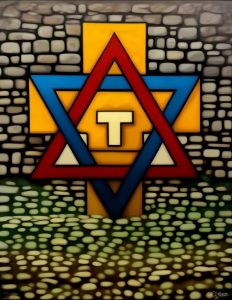
Golden Dawn Banner of the East
The Banner of the East is used in Golden Dawn ceremonial magick to represent the element of Air and the direction of East. It combines symbolic colours, geometry, and divine names to express spiritual and elemental forces.
Main Features and Symbolism
- Red Equal-Armed Cross: Represents the balance of the four elements and the intersection of spirit and matter. The red colour symbolises life force, energy, and spiritual power.
- Rosy Cross or Central Rose: A 22-petalled rose symbolising the 22 paths of the Tree of Life in Qabalah. Often inscribed with divine names such as YHVH or INRI in coded form. This central symbol unites divine harmony with the manifest world.
- Divine Names: Sacred names, often in Hebrew, such as YHVH, Elohim, or Adonai, invoke spiritual authority and protection. These names correspond to the spiritual forces associated with the element of Air.
- Colours:
- White or Pale Yellow Background: Symbolises air, intellect, dawn, and clarity.
- Red Cross: Signifies energy, willpower, and the dynamic force of spirit.
- Gold Accents: Represent divine wisdom and illumination.
- Geometric Structure: The equal-armed cross divides space into the four directions, representing balance and the framework of ritual space.
Use in Ritual
- Placed or held in the East during ceremonial magick, particularly in rituals like the Lesser Ritual of the Pentagram.
- Serves as a magickal anchor for the element of Air and the qualities of intellect, inspiration, and communication.
- Focuses the practitioner’s mind and invokes the spiritual presence associated with the East.