What are the Pitfalls of manifestation?
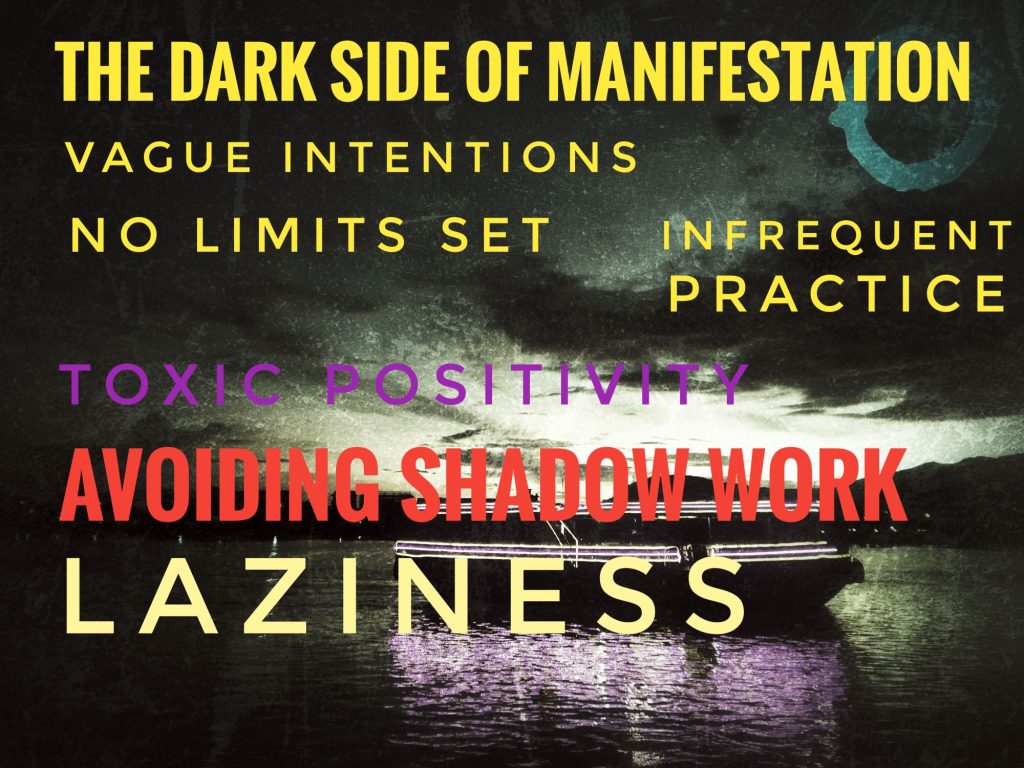
The dark side of manifestation can include maladaptive daydreaming, unintended manifestations from vague intentions, toxic positivity, gullibility, laziness and cultish behaviour. That being said, most people experience the positive side of manifestation, increased abundance, fulfilment, a sense of spiritual connection and wellness. Yet forewarned is forearmed, so in this article we shall go over a few things that can go wrong.
Can manifestation go wrong?
The outcome of manifestation can go wrong when intentions are vague or stated infrequently and no limits on a manifestation is set. The best way to illustrate this is to give an example from my own experience. I've practiced manifestation my whole life and now live abroad doing as I please in the tropics.
But over thirty years ago I was penniless, agoraphobic, unemployed and all I really had going for me was my study of manifestation. I was also into related subjects, magick, the law of attraction and so was able to devise a long ritual of 'life magic', i.e. I stated my intentions, made little models to go with them, and practiced every day for seven months towards the culmination of a master ritual.
Over the course of my life, all these goals came true. I wanted to go all around the world (check, over sixty countries) I wanted to study (check, bsc (hons)), I wanted money (check, can live on passive income now), I wanted to live abroad (check, resident in Cambodia).
Two things were a little too successful. One was to be slim. I wasn't overweight, particularly, a little plump, but I made a crude model of a slim me, practiced daily, and shed around fifteen kilos from my biggest weight. The issue is I've gone down to under sixty kilos (I'm 186cm) in what was basically an eating disorder. Luckily I was able to correct this via my understanding of conscious creation, but there were serious health implications from this blunder which I live with today.

It's necessary to both state intentions regularly when manifesting, but also their limits
The other goal that was a little too successful was to find my soul mate. Within six months of finishing my ritual I was on to other side of the world and met the woman of my dreams. The thing is, we were temporary workers is Australia, she is Japanese, this was before cell phones and computers. We had a long distance relationship for eight years, but it became obsessive on my part. I realised it was making me unhappy. It took another act of manifestation to be free. The thing is that the original practice had been used so intensely that the energy of this manifestation ran very deep and I went through a lot of pain for a long time towards total healing.

Junko - my soul mate
How to protect yourself from the unintended consequences of manifestation
These problems can be avoided by setting both a limit and a surrender into the original intention. Whenever practicing an act of deliberate creation, such as manifestation scripting, visualizing, going into a trance or whatever, simply state that you limit any energy that harms anyone or impedes their, or your, spiritual progress. Over the years, on the fly, I've developed a verse I say when I manifestation script, every two weeks (linked to the moon cycle).
I neutralize all magick, past present and future, that keep me and anyone away from awakening -- contracts, oaths and obligations.
Yes, I know that doesn't make sense in terms of grammar, because it evolved along those lines. I added that part about contracts, oaths and obligations to the end when I uncovered the belief that we carry these agreements from previous lives, unconsciously in our aura and it effects our present. I don't know if that's true or not but it felt right to include it.
Obviously, adapt this to something that ties in to your own belief. I think the statement can have an element of surrender, if a higher power or a part of your higher self, wants to limit or stop your intentions that you are sending out, to protect you or it's not your path, then so be it. What you are definitely manifesting is the emotional state you wish to be in, which you have right now, and in any moment.
Can manifestation be bad?
Although I don't believe it's possible to hurt other people (as they have their own energy field) it is possible for manifestation to be bad in the form of the mistaken belief that you have to be happy and excited all the time, leading to toxic positivity, which is often enforced by cultish behaviour within the manifestation community. A mistaken belief is that you need to be positive and excited about your coming manifestation to actually be able to manifest it.
A moment's thought (with a little common sense) shows this to be plainly absurd. What if you have a friend who is grieving, for example. In the height of their grief, positivity for the sake of it isn't helpful. In this instance, compassion is required. Being compassionate won't stop your manifestations coming true.
It's not healthy to keep the mind in a single state, even if that state is positivity (hence why it becomes toxic). A relevant resource here is to consider the Buddhist Seven Factors of Awakening. This teaching lists the seven different ways an enlightened mind experiences. You'll note that toxic positivity isn't one of them! One of them is indeed joy, but there are six others. More than one can be experienced at a time, but not one to the exclusion of the others.

• Mindfulness
• Investigation
• Energy
• Joy
• Tranquility
• Concentration
• Equanimity
Over the years, in my own experience (living the law of attraction and manifestation as a spiritual practice) my own thinking boils this down to three ways my mind can be experiencing.
- One is positive positivity, joy and excitement about my coming manifestations, but this state includes gratitude for things I have now and happiness caused by other people obtaining what they want in life.
- Another state is compassion, as I mentioned, for others and for yourself.
- Lastly, both inquiry and/or absorption. Sometimes when my mind is concentrating on something or I'm busy I can be completely absorbed. Other times, I am in inquiry, and by this I mean pondering or questioning. I use this to deal with negative mind states.

So say I feel depressed, because I lost something for example. I can feel compassion for myself. I can widen it to feel compassion for all the people in the world who are feeling sad because they lost something, perhaps far more valuable than me. But I can also turn the observation around and ask who is depressed, in an existential way. I use my negative state to look for the self who feels depressed, and so it becomes a 'who am I?' meditation – an ultimate koan – that overtime is, I believe, leading me towards full awakening, This way, my manifestation practice is also a practice in spiritual enlightenment.
Is manifestation bad for mental health?
Manifestation can occasionally be bad for mental health in that it can normalize maladaptive daydreaming. Maladaptive daydreaming means to daydream excessively, in a way that impinges on normal functioning. It often goes under the radar with people practicing manifestation, as the practice of manifestation encourages visualization, recalling mental images of your goal, prioritizing imagination over the external world perceived by the senses.
Daydreaming becomes maladaptive when it is so excessive that it impinges on daily life, is hard to stop and prevents tasks from being completed. Danger signs can include whispering or talking to yourself while daydreaming and gesturing or rocking back and forth.
Excessive daydreaming about possible negative outcomes is rumination, and can indicate depression. Most maladaptive daydreaming is positive, escapist fantasy, which is why it is so hard to recognise and deal with. In severe cases, rumination or maladaptive daydreaming may need medication.

How can I treat maladaptive daydreaming?
One thing you can do is to analyse your daydreams. This is a whole practice in itself, which I will cover soon. For example, over a period of mindfulness and recording my daydreams, I noticed they often have a theme of injustice. I would be imagining myself in a situation where I was the victim in a very unfair situation and was finally being proved right. For example, one daydream might involve being falsely accused of stealing and proved innocent by cctv and the shop manager is apologizing in court. This is far removed from my real life, this has never even remotely happened to me – but there were so many wildly different daydreams where I would be the victim getting justice.

Of course, in my childhood, there was a lot abuse, and I was often a powerless victim. So I have carried this into adulthood. It's necessary to keep a long record, over time, noting daydreams, and asking, what do I need to keep feeling? As this is what your mind is creating for you now. You need to feel something. Why? This indicates a need for some shadow work.

A way to lesson maladaptive daydreaming as a negative aspect of manifestation
Another thing is to look for triggers, then avoid them. For example, these daydreams I mentioned about injustice. There is a certain program on youtube, a reality program about strict parents, that will trigger me for two or three hours after I watch it. It clearly sparks memories of past abusive situations and the need to feel in the right and be noticed – but these daydreams then play for hours. So being aware of them and mindful helps, but often triggers can just be avoided completely.
A positive way to override maladaptive daydreaming and keep manifestations on track
Another remedy is visualization. Yes, maladaptive daydreaming is a form of visualization, but a cure can be to to take control with a consciously practiced visualization. This can be from a vision board (a collection of pictures of your goals). If you have a little practised sequence of imaging yourself achieving your goals, with the associated feeling of joy, you can keep imaging this in the moment, until the tendency to dream the negative fades.
Another way to cure maladaptive daydreaming is to interact with the characters in a different way. For example, in my example of being accused to stealing so I can feel vindicated, I could change my characters reaction within the daydream, forgive the manager and choose to feel compassion.
Also, you might try scripting an affirmation to be repeated until a daydream stops, based on what was uncovered in your daydream analysis. For example, in my daydream of being a victim, I might repeat:
I forgive all people who wronged me in my past. I am now freed and empowered by my mindfulness.
Keep it real
Remember, most people who practice manifestation experience a positive effect in their lives. The examples and advice here is to forearm you to be mindful and avoid any pitfalls and point you towards any shadow work needed before commencing manifestation. This way, the practice can be for you what it has been for me, not only life enriching and imparting all the meaning I obtain from my existence, but (hopefully) charting me on the course to full awakening.

More Manifestation Articles
Visualization Tehniques for Manifestation